














Monte Pana and Mont de Sëura: everything you need to experience the Sassolungo
Here you will find answers to frequently asked questions about holidays, arrivals, activities and events at Monte Pana in the Dolomites.
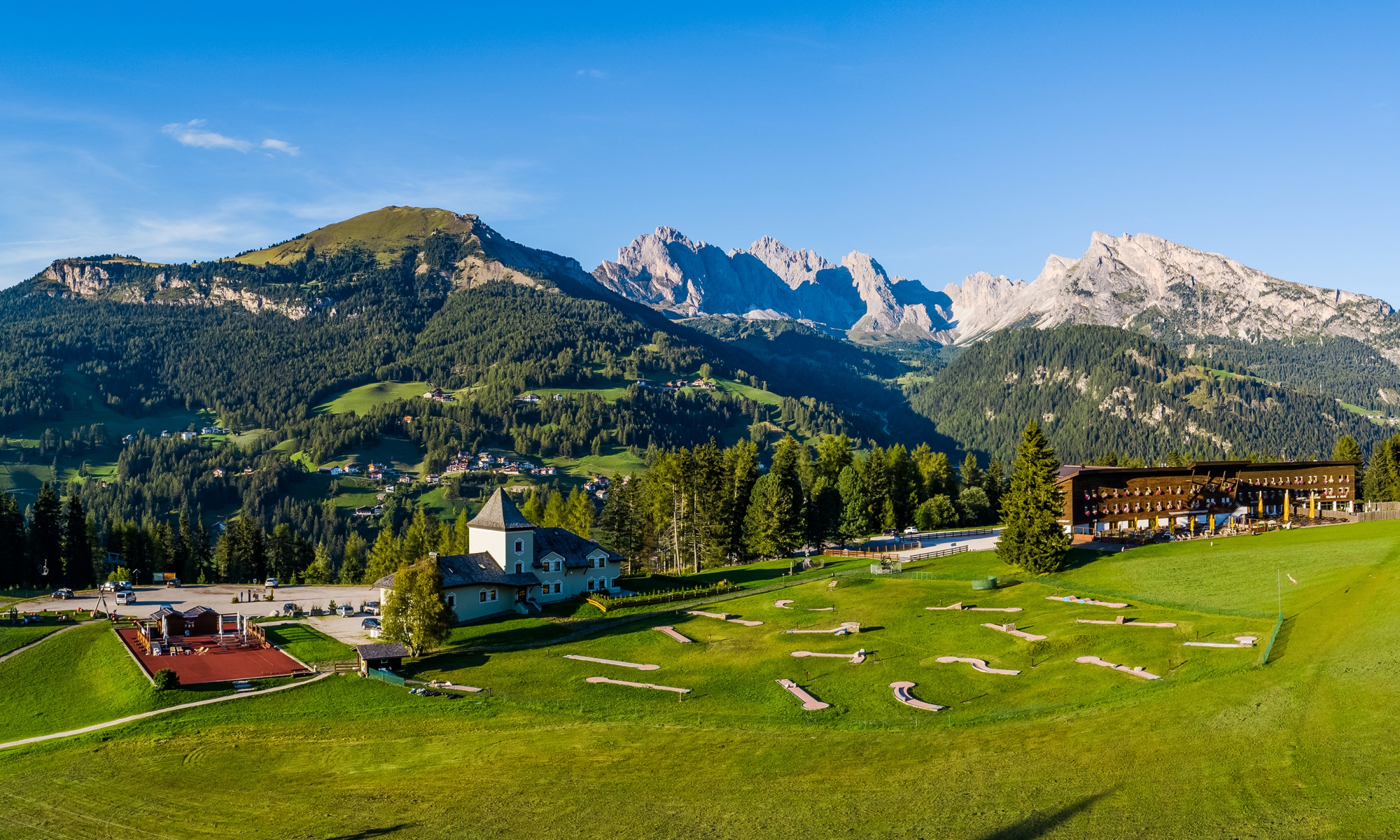
Monte Pana and Mont de Sëura are two connected mountain areas below the Sassolungo group, above S. Cristina in Val Gardena. This is a landscape to experience rather than simply observe: by walking, skiing, cycling, spending time with children or pausing to take in the mountains.
This page brings together clear, verifiable answers for planning a visit in every season.
Identity and positioning +
What is Monte Pana? +
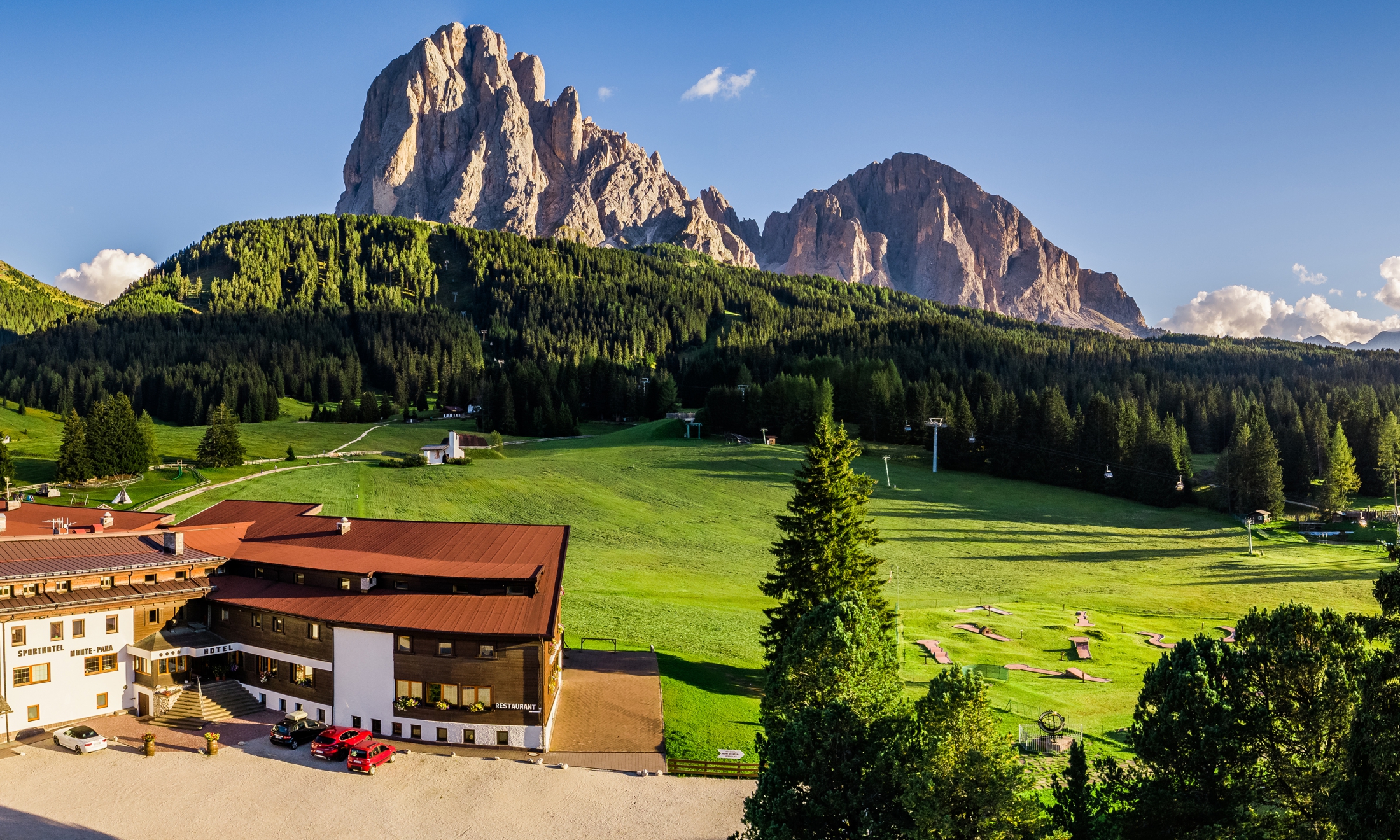
Monte Pana is a high plateau above S. Cristina in Val Gardena, at roughly 1,600 to 1,800 metres. Meadows, woodland and close-up views of the Sassolungo group make it suitable for a short visit or a full day. In summer it is a starting point for walks, hikes and family activities; in winter it offers alpine skiing, cross-country skiing and snow-covered trails.
Where is Monte Pana located? +
Monte Pana lies above S. Cristina, one of the three villages in Val Gardena, South Tyrol. It sits at the foot of the Sassolungo group and can be reached from the village by car, chairlift or on foot via trail no. 30. It is also a useful gateway towards Mont de Sëura, Passo Sella and routes leading towards the Alpe di Siusi.
Why is Monte Pana worth visiting during a Dolomites holiday? +
Monte Pana combines Dolomite scenery, easy activities and outdoor sports in one compact area. Visitors can enjoy the Sassolungo without necessarily taking on a demanding hike, mix gentle walks with family experiences and continue up to Mont de Sëura. It is especially appealing to travellers looking for a scenic yet easy-to-plan outing with places to eat, options to stay longer and live information on weather and lifts.
Can Monte Pana be visited all year round? +
Yes. The landscape and activities change with the seasons: summer and autumn focuses on hiking, themed trails, cycling and outdoor experiences, while winter offers skiing, cross-country skiing, snow walks and connections to the ski area. Lifts, attractions and food outlets operate seasonally, so visitors should check weather, webcams, opening times and service updates before travelling.
Who is Monte Pana particularly suitable for? +
Monte Pana suits families, hikers, skiers, cross-country skiers, cyclists, photographers and anyone who simply wants to spend a few hours in nature. Its variety supports very different visits: a panoramic walk, a family day, a sporting itinerary, a food stop or a photography outing. Routes and activities should always be chosen according to the season, conditions and personal ability.
How much time should visitors allow for Monte Pana? +
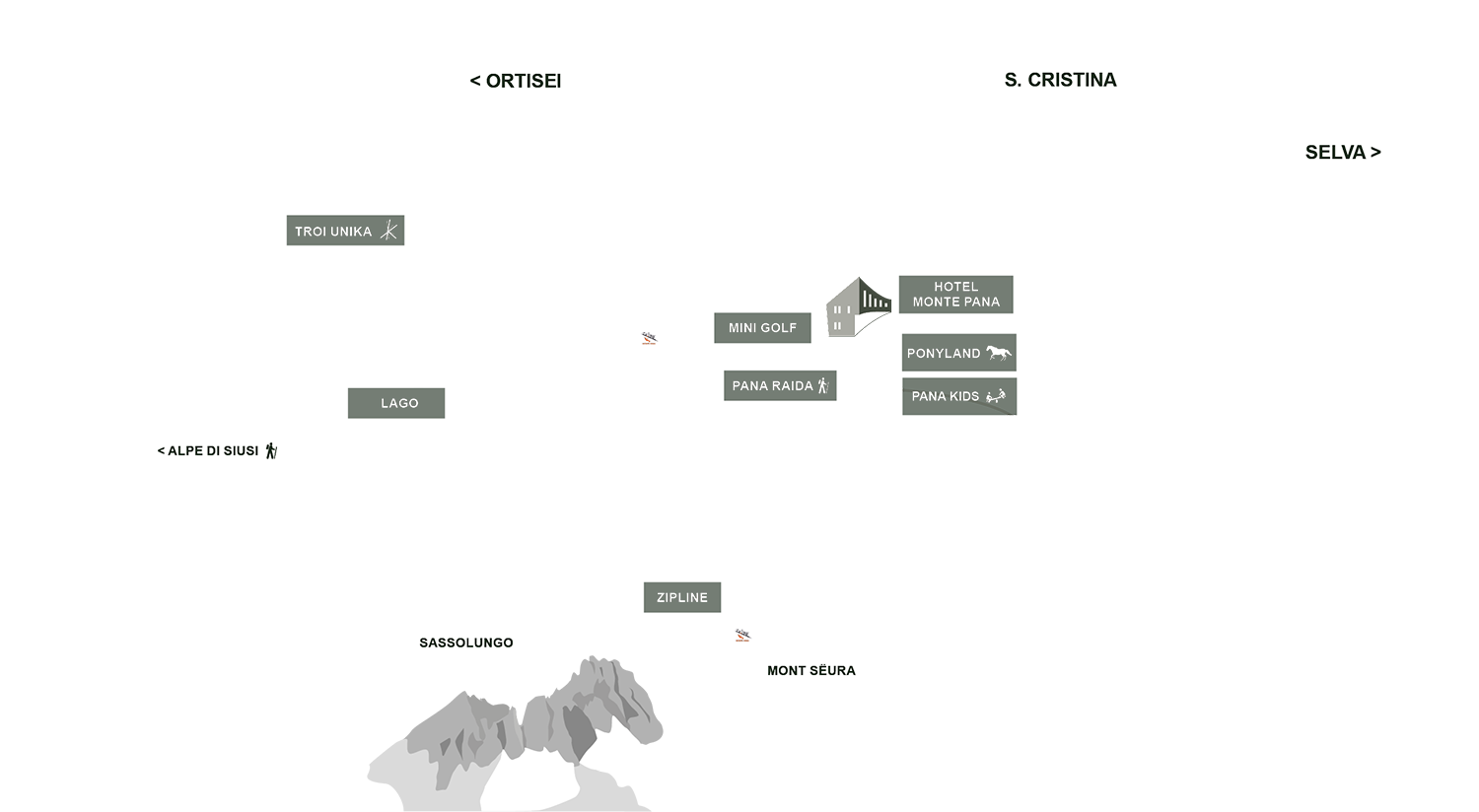
For a first visit, allow at least two or three hours for the scenery, a short walk and a break. Half a day makes room for PanaRaida, Troi UNIKA or minigolf, while a full day allows time to continue to Mont de Sëura, take a longer hike or combine several activities. In winter, timing depends more strongly on lift operations, pistes and snow conditions.
Is Monte Pana a must-see place in Val Gardena? +
For travellers who want to experience the Sassolungo at close range, Monte Pana is one of Val Gardena’s most accessible, spectacular and versatile places. It is more than a viewpoint: the area offers trails, lifts, family activities, sports and cultural features. This makes it a strong choice for combining scenery with meaningful experiences rather than limiting the visit to a quick photo stop.
How can I get close to Sassolungo without doing a difficult hike? +
One of the easiest ways to experience Sassolungo at close range without immediately undertaking a long or difficult mountain hike is via Monte Pana and Mont de Sëura.
From S. Cristina, visitors can first reach Monte Pana. When the lifts are operating, the Mont de Sëura chairlift continues into the high-alpine area at more than 2,000 metres, directly beneath the Sassolungo Group.
From the upper area, Sassolungo rises immediately in front of you, so a long hike is not necessary simply to appreciate the scale and proximity of its rock walls.
Those wishing to walk further can continue towards the Comici Hut and Sella Pass. The official route from Mont de Sëura towards Sella Pass covers approximately 4.7 km and takes around 1 hour and 30 minutes, with Sassolungo remaining the defining feature of the landscape for much of the route.
This makes it possible to experience Sassolungo at very close range without climbing the summit or completing the full circuit around the massif.
Sassolungo and Mont de Sëura +
What is the Sassolungo? +
The Sassolungo, known as Langkofel in German and Saslonch in Ladin, is the main peak of the mountain group between Val Gardena and Val di Fassa. It rises to 3,181 metres and is one of Val Gardena’s defining landmarks. From Monte Pana, its walls, towers and ridges can be seen from a broad yet close perspective.
Are Sassolungo, Langkofel and Saslonch the same mountain? +
Yes. Sassolungo, Langkofel and Saslonch are the Italian, German and Ladin names for the same 3,181-metre mountain overlooking Val Gardena.
Sassolungo is the Italian name.
Langkofel is the German name.
Saslonch is the Ladin name used in Val Gardena.
All three names essentially have the same meaning: “long rock” or “long stone”, referring to the mountain's distinctive shape.
The individual summit should not be confused with the entire mountain massif. In Italian, the massif is called Gruppo del Sassolungo; in German, Langkofelgruppe; and in English, it is generally referred to as the Sassolungo Group or Langkofel Group.
The three different mountain names therefore do not describe different peaks. They reflect the multilingual identity of Val Gardena and South Tyrol.
Why is the view of the Sassolungo from Monte Pana so special? +
Monte Pana lies directly below the massif and has broad open areas that reveal the shape of the Sassolungo group clearly. The contrast between meadows, forests and rock walls creates a naturally strong composition, including for photography. As visitors continue towards Mont de Sëura, the mountain feels even closer and remains visible along much of the route.
What is the difference between Sassolungo and the Sassolungo Group? +
Sassolungo is an individual mountain and, at 3,181 metres, the highest summit of the massif that bears its name. The Sassolungo Group, also known as the Langkofel Group, refers to the entire mountain group surrounding it.
The massif extends between Val Gardena and the upper Val di Fassa. It is bordered by the Sella massif to the east, the Fassa and Duron valleys to the south, Alpe di Siusi to the west and Val Gardena to the north.
In addition to Sassolungo itself, the group includes several other distinctive peaks and formations, including Sasso Piatto (Plattkofel), Punta Grohmann and the Five Fingers.
Therefore, the term Sassolungo normally refers specifically to the 3,181-metre main summit, whereas the Sassolungo Group describes the entire mountain massif.
Monte Pana and Mont de Sëura provide particularly close perspectives of this mountain group and access to numerous trails around its base.
What is Mont de Sëura? +
Mont de Sëura is the high-alpine area above Monte Pana, directly at the foot of the Sassolungo Group. It can be reached from Monte Pana by the Mont de Sëura chairlift and is an excellent starting point for hiking, skiing and close-up views of Sassolungo. The area is connected to routes leading towards the Sella Pass, the Sassolungo Group and Alpe di Siusi. The upper lift station lies at an altitude of more than 2,000 metres. Mont de Sëura is also a privileged starting point for hiking, winter sports, paragliding and spectacular views of Sassolungo.
In some sources and in everyday usage, the shorter name Mont Sëura is also used. However, this should not be confused with the Mont Sëura in the Puez Group, which is a different geographical location.
What is the difference between Monte Pana and Mont de Sëura? +
Monte Pana is the lower, easily accessible plateau above S. Cristina, with parking, facilities, family trails and services. Mont de Sëura is the higher area, reached mainly by the second chairlift or by hiking trails, and offers an even closer connection with the Sassolungo. The two areas complement each other and can be combined in one day.
Are Mont Sëura at Monte Pana and Mont de Sëura the same area? +
Yes. When Mont Sëura refers to the area above Monte Pana at the foot of Sassolungo, it generally means Mont de Sëura. The shorter name Mont Sëura is also used in tourism sources and everyday language. However, another place with the same name exists in Val Gardena, so MontePana.com primarily uses the full name Mont de Sëura and clearly associates it with Monte Pana and Sassolungo.
How do you reach Mont de Sëura? +
From Monte Pana, visitors normally take the Mont de Sëura chairlift when it is operating. Hikers can also reach the area on foot using routes suited to their experience. Because operating dates, timetables and trail conditions vary by season, the lift status and current conditions should be checked before setting out.
Can visitors experience the Sassolungo without a difficult hike? +
Yes. The Monte Pana plateau already provides broad views of the massif and can be reached by car or chairlift. Short walks through meadows and woodland offer changing perspectives without major elevation gain. Those who want to get closer can use the Mont de Sëura chairlift, subject to accessibility, weather and operating times.
Can you travel from Monte Pana to Passo Sella without a car? +
Yes. From Monte Pana, visitors can ascend to Mont de Sëura and continue on foot towards Passo Sella along a panoramic route. The official Val Gardena itinerary is relatively short, but still requires suitable footwear and attention to conditions. The return journey, lift schedules and public transport connections should be planned in advance.
Is Monte Pana connected to the Alpe di Siusi? +
Monte Pana is linked to the Alpe di Siusi area by hiking routes and, in winter, through the ski network and the ski bus mentioned by the portal. Summer itineraries can be long and require careful planning. This is not a simple village transfer: lifts, duration, elevation and the return journey must all be considered.
Access and planning +
How do you reach Monte Pana by car? +
A road leads directly from S. Cristina to the Monte Pana plateau. The drive is short, but it can be busy at peak times and requires extra care in winter. Visitors should check road conditions, weather and parking availability before setting out.
Can you reach Monte Pana by lift? +
Yes. The Monte Pana chairlift connects S. Cristina with the plateau when it is operating. It is convenient for visitors who prefer to leave the car in the village or begin the day with a scenic ascent. Operating dates and times differ between summer and winter and should be checked before the visit.
Can you walk from S. Cristina to Monte Pana? +
Yes. Trail no. 30 climbs through the forest from the village and is generally described as taking about 45 minutes, depending on pace and conditions. It is a good alternative to driving or taking the chairlift, but suitable footwear is needed and winter accessibility must be checked.
Where can visitors park at Monte Pana? +
Three parking areas are indicated at Monte Pana: municipal paid car parks P1 and P2, and free car park P3. Rules, charges and availability may change, so local signs and current information take priority. On busy days, parking in the valley and taking the chairlift may be the easier option.
Can Monte Pana be visited without a car? +
Yes. Visitors can use public transport to reach S. Cristina, continue to the chairlift valley station and ascend by lift, or walk up via trail no. 30. For routes ending elsewhere, such as towards Passo Sella, bus connections, lift schedules and the return journey should be coordinated in advance.
Where can visitors check the weather, webcam and lift status? +
Montepana.com provides sections for weather, webcams and lifts.
Families and children +
What should visitors bring for a day at Monte Pana? +
Even for a short visit, shoes with good grip, sun protection, water and a warm or waterproof layer are advisable. Weather can change quickly at altitude. In winter, snow-appropriate footwear and warm clothing are essential; hiking, cycling, snowshoeing and skiing require the relevant equipment and a current assessment of conditions.
Is Monte Pana suitable for pushchairs and visitors with reduced mobility? +
The plateau includes some easily accessible areas, and pushchair rental is available, but not every trail is level or obstacle-free. Accessibility depends on the specific activity, surface conditions and operating lifts. Visitors with particular requirements should contact the relevant operator or tourist office in advance.
Is Monte Pana suitable for families with children? +
Yes. Monte Pana combines open spaces, themed trails, a playground, minigolf, ponies and other activities, making it easy to alternate movement and rest. Families can build a flexible day around simpler or more adventurous options. Minimum ages, operating times and conditions for individual attractions should be checked with the providers.
What is the PanaRaida adventure trail? +
PanaRaida is a woodland adventure trail starting in the Monte Pana area. About 2.6 kilometres long, it has twelve interactive stations that help visitors discover nature through play, including a giant swing, water features, a tree house and wooden installations. It is designed for families, although adults can also enjoy the scenery and educational character.
How long is PanaRaida and how much time does it take? +
The trail is approximately 2.6 kilometres long. The duration varies because the twelve stations encourage children to stop and play. Allow at least around ninety minutes for a relaxed visit, and longer with young children or extended stops. Suitable shoes and a light change of clothing can be useful near the water play areas.
What is the Troi UNIKA art and nature trail? +
Troi UNIKA is an art and nature trail of about 1.7 kilometres at Monte Pana. It connects the landscape, Val Gardena’s woodcarving tradition and contemporary works, including “Pultredes” by Stephan Perathoner and “La Piuma” by Eric Perathoner. It suits visitors who want to add a cultural element to a day in nature.
What activities for children are available at Monte Pana? +
Summer options include PanaRaida, the Pana Kids playground, minigolf, ponies and seasonal experiences such as the zip line. Availability is not the same throughout the year. A relaxed family day works best when one or two main activities are selected, leaving time for a walk and a break. For Winter click here
How can families plan a half-day at Monte Pana? +
A simple plan is to arrive in the morning, follow PanaRaida or Troi UNIKA, take a break and add minigolf or the playground. With older children, consider the zip line or the ascent to Mont de Sëura. The programme should be adapted to weather, opening times and the children’s energy levels.
Summer +
What can visitors do at Monte Pana in summer? +
In summer, Monte Pana offers walks, hiking, mountain biking and e-biking, themed trails, bike and pushchair rental, a zip line, minigolf, a playground, paragliding and horse riding. It is also a starting point towards Mont de Sëura, Passo Sella and the Alpe di Siusi. Activities should be chosen according to available time, ability and weather.
Are there easy walks at Monte Pana? +
Yes. The plateau has relatively easy sections through meadows and woodland, as well as themed trails such as Troi UNIKA and PanaRaida. However, “easy” does not necessarily mean flat or obstacle-free; roots, gradients and uneven surfaces may occur. Visitors should read the route description and choose according to the group.
Which hikes start from Monte Pana? +
Routes from Monte Pana lead towards Mont de Sëura, Passo Sella, the Alpe di Siusi and the Sassolungo group. Some are panoramic walks, while others require several hours, significant elevation and good fitness. Before setting off, it is advisable to check the duration, difficulty, elevation gain, any equipment required and return options in the detailed itinerary description.
Is Monte Pana suitable for mountain biking and e-biking? +
Yes. The area is a starting point for mountain bike and e-bike tours of different difficulty levels. Riders must follow signs, local rules and shared-trail etiquette. Before starting, check the route, elevation, surface, battery range and whether bikes can be transported on the lifts.
Can visitors rent bicycles and pushchairs at Monte Pana? +
Yes, there is a rental service offering mountain bikes, e-bikes, safety equipment and pushchairs. Models, sizes, availability and conditions can vary, so booking or contacting the rental provider in advance is advisable, especially during peak season.
What is the Mont de Sëura zip line like? +
The zip line links Mont de Sëura with the Monte Pana area through a multi-section adrenaline experience. The portal states a total route of about 1.6 kilometres and maximum speeds of up to 90 km/h. Age and weight limits, weather conditions, clothing requirements and opening status must be checked directly with the operator.
The area is sometimes also referred to by the abbreviated form ‘Mont Sëura'.
Can visitors go paragliding from Mont de Sëura? +
The portal presents tandem paragliding flights starting from Mont de Sëura, reached by chairlift. The activity depends heavily on wind and weather and is operated by specialist providers. Booking, requirements, insurance, clothing and the meeting point must be confirmed directly with the operator.
Can visitors ride horses or ponies at Monte Pana? +
Yes. Ponyland and horse-riding activities are designed especially to introduce children to horses and provide nature-based experiences. The offer is seasonal and may depend on age, availability and weather. Checking and booking before arrival is recommended.
What is a good summer half-day plan at Monte Pana? +
Arrive in the morning, spend time enjoying the scenery and choose PanaRaida, Troi UNIKA or a short walk. After a break, add minigolf or take the chairlift towards Mont de Sëura. The plan is modular: remain on the plateau in uncertain weather, or continue higher when conditions are stable.
How can visitors plan a full summer day between Monte Pana and Mont de Sëura? +
A full day can begin with the ascent to Monte Pana, continue to Mont de Sëura and include a panoramic hike towards Passo Sella or another suitable route. On returning, visitors can see the chapel or sundial and stop for food. It is essential to respect the final lift time and avoid overloading the itinerary.
Winter +
What can visitors do at Monte Pana in winter? +
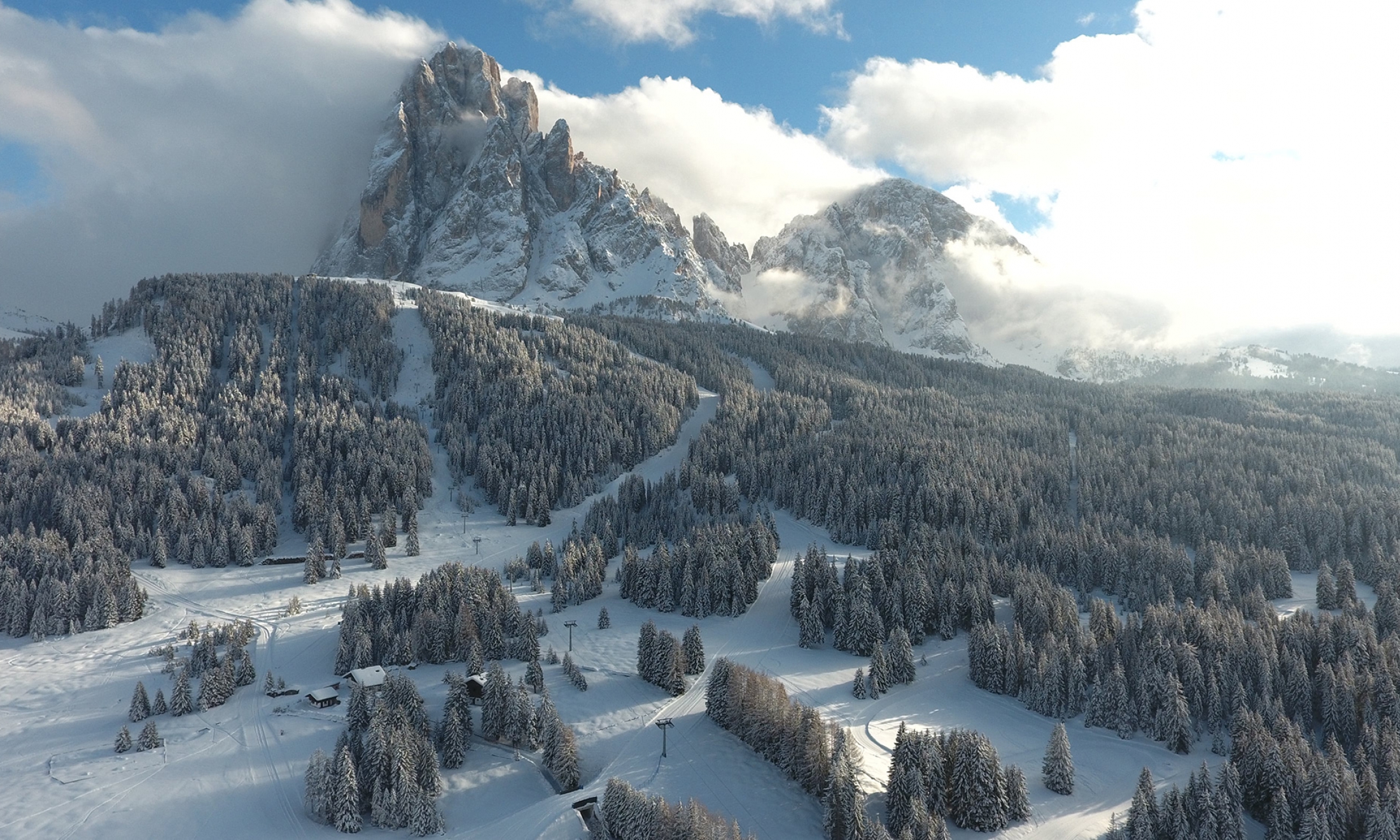
In winter, Monte Pana offers alpine skiing, snowboarding, cross-country skiing, winter walks, snowshoeing and family activities. The ski area connects to the Sellaronda via Mont de Sëura and also features a winter zip line. Snow conditions, operating status and safety information should be checked daily.
Can skiers access the Sellaronda from Monte Pana? +
Yes. The Mont de Sëura chairlift provides access to the ski network connected with the Sellaronda. The connection depends on open lifts, pistes and current conditions. To complete the circuit, skiers must start early enough and check the direction, operating times and required ability.
What are the Alpha and Bravo pistes at Mont de Sëura? +
Alpha is a black run intended for experienced skiers. Bravo is a red piste of about 2.2 kilometres with roughly 400 metres of vertical drop, also known as “La Romantica”. Both descend from Mont de Sëura towards Monte Pana. The classification does not replace an assessment of daily conditions and personal ability.
Why is the Bravo piste one of the “Legendary 8”? +
The red Bravo piste was selected as one of eight representative runs in Val Gardena. Woodland sections, changing gradients and scenery at the foot of the Sassolungo give it its distinctive character and the nickname “La Romantica”. Skiers should always check that the piste is open and in suitable condition.
Is Monte Pana suitable for beginner skiers and children? +
The area includes learning facilities and ski and snowboard instruction. However, not every descent is suitable for beginners: Alpha is black and Bravo is red. Families should use the teaching areas and ask the ski school for advice based on age and ability.
What is cross-country skiing like at Monte Pana? +
The Monte Pana cross-country centre lies in open scenery below the Sassolungo and offers five trails covering more than 30 kilometres in total. Routes of different difficulty and rental services are available. Opening status, grooming, tickets and connections should be checked in the latest report.
Can visitors go winter walking and snowshoeing at Monte Pana? +
Yes. Monte Pana and Mont de Sëura offer winter routes with views of the Sassolungo and opportunities for snowshoeing. Conditions can change quickly, and a summer trail is not automatically safe in winter. Visitors must follow open routes, use suitable equipment and assess any avalanche risk.
Is Monte Pana interesting for non-skiers? +
Yes. Non-skiers can enjoy the scenery, use open winter walking routes, go snowshoeing, stop for food or simply spend time in the snow. Some experiences still require lifts or booking. The day should be planned by checking which pedestrian routes and services are actually available.
Does the zip line operate in winter? +
Yes! The zip line at Mont de Sëura is also open in winter. Operation depends on snow, wind, visibility and the provider’s decision. Before including it in the itinerary, visitors must check operating status, requirements, clothing and access.
How can visitors plan a winter day at Monte Pana? +
Skiers can start at Monte Pana, ascend to Mont de Sëura and enter the ski network, returning with sufficient time before closing. Non-skiers can combine the scenery, a winter walk, lunch and a short activity. In both cases, planning should begin with the snow report, lift status and weather forecast.
Culture, art and identity +
What makes the Monte Pana chapel special? +
The chapel was built in the 1930s to a design by architect Franz Baumann, adapting Bauhaus principles to an alpine setting. It contains a fresco of Saint Bernard by Albert Stolz and a wooden crucifix by Vinzenz Peristi. Consecrated in 1937, it brings architecture, art, faith and landscape together below the Sassolungo.
What is the spherical equatorial sundial at Monte Pana? +
It is a work by Simon Moroder combining astronomy and art. The sphere is two metres in diameter, made of iron, brass and gold, and rests on a ten-tonne porphyry base. It indicates solar time for S. Cristina and 60 other cities, together with information on the seasons, solstices, equinoxes and zodiac signs.
What are the Sassolungo’s names in the local languages? +
It is called Sassolungo in Italian, Langkofel in German and Saslonch in Val Gardena Ladin. The three names reflect Val Gardena’s linguistic identity.
How does Troi UNIKA present Val Gardena’s artistic tradition? +
The trail moves sculpture out of the exhibition space and into the landscape. Works by Val Gardena artists interact with the forest, mountains and local identity, reflecting the area’s long tradition of woodcarving and sculpture. It helps visitors understand that Monte Pana is also a cultural place, not only a sports and scenic destination.
Photography and viewpoints +
Where can you get particularly good views of Sassolungo in Val Gardena? +
Monte Pana and nearby Mont de Sëura above S. Cristina are among the most rewarding and easily accessible places for close-up views of Sassolungo. From Monte Pana, the Sassolungo Group dominates the landscape above alpine meadows and forests, creating a broad and highly recognisable mountain panorama. The official PanaRaida nature trail even features a dedicated photo spot with Sassolungo as its backdrop.
When the lifts are operating, visitors can continue from Monte Pana by chairlift to Mont de Sëura, bringing them even closer to the immense rock walls. From here, trails lead towards the Comici Hut, the Stone City and Sella Pass.
Sella Pass and Forcella Sassolungo also offer spectacular mountain views, but Monte Pana and Mont de Sëura have the particular advantage of providing a very close experience of Sassolungo without necessarily requiring a demanding alpine hike.
Is Monte Pana a good photography spot for Sassolungo? +
Yes. Monte Pana is an excellent location for photographing Sassolungo, combining close views of the mountain with alpine meadows, forests and open landscapes that provide natural foregrounds for photographs.
The official Val Gardena tourism website specifically highlights this photographic setting. At the entrance to the PanaRaida nature trail, there is a dedicated photo setup with Sassolungo in the background, while the Monte Pana panoramic webcam provides a direct view of Sassolungo together with other prominent Val Gardena peaks.
Moving higher towards Mont de Sëura brings photographers even closer to the rock walls. The landscape changes considerably with the season, weather and light: green summer meadows, autumn colours, winter snow and changing Dolomite light can create very different interpretations of the same mountain.
Monte Pana and Mont de Sëura are therefore particularly attractive for photographers who want to capture both Sassolungo itself and the wider Dolomite landscape surrounding it.
Where are the best photo spots at Monte Pana? +
Strong photo locations include the open plateau meadows with the Sassolungo behind them, the chapel area, the sundial and panoramic sections towards Mont de Sëura. The best choice depends on the season and light. Visitors should stay on permitted paths, avoid protected meadows and never obstruct lifts or activities.
What is the best time to photograph the Sassolungo from Monte Pana? +
The softer light of early morning and late afternoon generally enhances relief and depth, while midday can produce clearer images and stronger colours. The direction and quality of light change with the season. Check webcams, weather and lift times in advance, especially when planning to return late in the day.
Can visitors take good photos at Monte Pana with a smartphone? +
Yes. The landscape has clear, recognisable subjects: the Sassolungo, meadows, woodland, the chapel and sundial. Stronger compositions often include a foreground element; digital zoom is best avoided. Capture both vertical and horizontal formats. In winter, protect the battery and device from the cold.
Food and accommodation +
Where can visitors eat at Monte Pana? +
The area offers the restaurant at Dolomites Hotel Monte Pana, serving regional and international dishes, and the Panagnam snack bar for a more informal stop. Opening, service and booking arrangements vary by season.
Can visitors stay overnight directly at Monte Pana? +
Yes. There are hotels and apartments in the area, allowing guests to experience the landscape in the morning and evening and, in winter, stay close to pistes and cross-country trails. Availability, category and services belong to the individual properties and must be checked on their pages or booking systems. Overnight stays in campervans are not permitted.
Events and experiences +
What is the Flying Aperitivo at Mont de Sëura? +
The Flying Aperitivo is a seasonal experience on the Mont de Sëura chairlift, combining an evening ascent with scenery and an aperitif. The Sassolungo remains in view while drinks and small bites are served. Dates, times, booking and operation depend on the current programme and weather. The Flying Aperitivo usually takes place on Thursdays.
What events take place at Monte Pana? +
The calendar may include food experiences, family initiatives, sporting events and winter activities such as moonlight cross-country skiing. The programme changes each season.
Is Monte Pana suitable for a romantic outing? +
Yes. The close Sassolungo views, open spaces, chapel and panoramic walks create an appealing setting for couples. A visit can be combined with an aperitif, dinner or an overnight stay. For a quieter experience, choose less busy times and always respect paths, private property and ongoing activities.
Sustainability and visitor behaviour +
How can visitors explore Monte Pana and Mont de Sëura responsibly? +
Where possible, use public transport, chairlifts or walking routes, stay on marked trails, take waste away and respect meadows, wildlife and property. Cyclists should moderate speed and give way to walkers.